


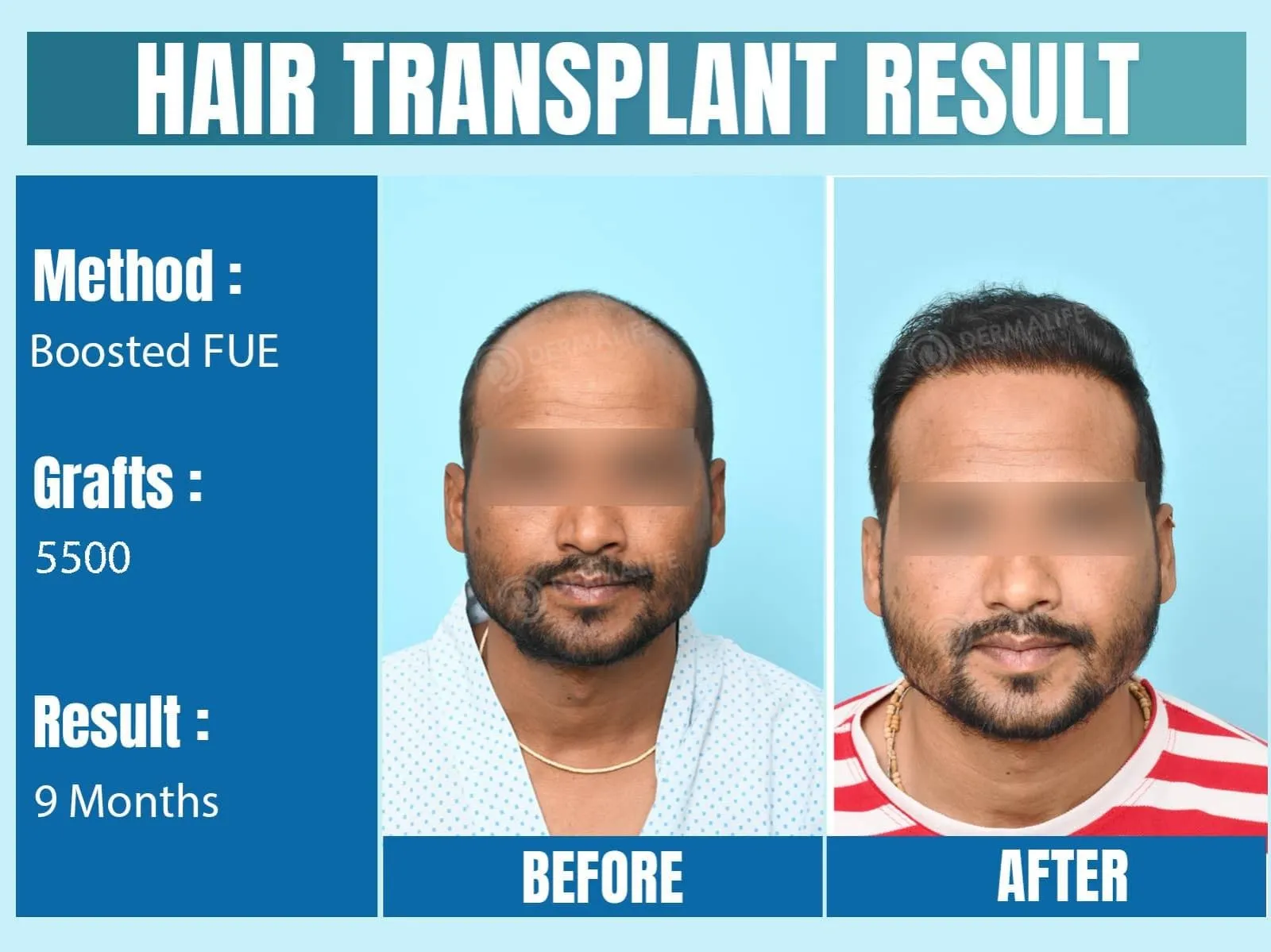
When exploring solutions for hair loss, many prospective patients focus heavily on technology, graft counts, and clinical facilities. However, a critical truth in restorative medicine is that the single most decisive factor governing the outcome of a hair transplant is the skill, experience, and artistic eye of the operating surgeon.
Hair transplantation is often perceived as a straightforward mechanical procedure—harvesting hair from the back of the head and placing it on top. In reality, it is a highly delicate microsurgical discipline and visual art form. Two patients receiving the same number of grafts can achieve drastically different outcomes depending entirely on the competence of their surgical doctor.
1. Graft Survival and Biological Handling
The biological integrity of living tissue depends on precise execution during extraction, storage, and implantation. Hair follicles are delicate biological structures containing delicate stem cells, blood capillaries, and cellular matrices.
- Minimizing Transection: Transection occurs when an extraction tool slices through the hair bulb or shaft beneath the skin surface, rendering the graft nonviable. A master surgeon understands subtle variations in scalp resistance, follicle depth, and skin elasticity, keeping transection rates well under 3% to 5%. In contrast, inexperienced technicians often suffer high transection rates exceeding 20%, resulting in wasted donor supply.
- Extracorporeal Time Management: Once extracted, grafts are vulnerable to ischemia (lack of oxygen), temperature fluctuations, and dehydration. A skilled surgical leader manages procedural efficiency and ensures grafts are handled with specialized atraumatic forceps and stored in optimal hypothermic holding solutions to preserve cell vitality.
2. Artistic Hairline Design and Natural Aesthetics
A natural hair transplant does not simply add volume; it recreates natural human anatomy. The human hairline is not a straight, rigid line, but a soft, subtle irregular transition zone.
[Donor Extraction] ➔ [Microsurgical Sorting] ➔ [Strategic Angle Incision] ➔ [Artistic Micro-Placement]
Micro-Graft Placement Dynamics:
- Natural Angular Distribution: Hair emerges from the scalp at specific acute exit angles—typically 10 to 15 degrees at the frontal hairline, angling upward to 30 to 45 degrees toward the mid-scalp. An inexperienced practitioner who places grafts perpendicular (90 degrees) creates an unnatural, harsh “doll-hair” appearance that is nearly impossible to style.
- Follicular Grading: Achieving an undetectable hairline requires placing single-hair follicular units exclusively at the leading hairline edge, gradually transitioning to double and triple-hair units deeper behind it to create dense visual volume.
3. The Clinical Value of World-Class Expertise
Evaluating surgeon credentials and specialized training is the single best way to protect your safety and secure an optimal aesthetic result. Choosing a recognized hair transplant surgeon in Delhi ensures your procedure is backed by formal dermatological qualification and international fellowship training.
For instance, Dr. Gaurav Garg, Director of Dermalife Hair and Skin Clinic in Delhi, brings extensive clinical expertise to every patient consultation and surgical procedure. Having earned his M.B.B.S. and M.D. in Dermatology & Venereology from the prestigious Seth G.S. Medical College and KEM Hospital in Mumbai, Dr. Garg underwent advanced training as a Fellow in Dermato-Surgery at P.G.I. Chandigarh and completed a specialized Fellowship in Advanced Dermatology, Dermato-Surgery, and LASERs at the National Skin Centre (NSC, Singapore).
Dr. Garg’s global academic standing is further underscored by his contributions as an invited speaker at international conferences, including the Los Angeles Hair Restoration Courses (2021) in the USA and the World FUE Institute (2023) in Bangkok, Thailand. Consulting a world-accredited expert at a leading hair transplant center in Delhi ensures that every microscopic incision is placed with precision, maximizing density while protecting your long-term donor health.
4. Conservative Donor Area Management
The human scalp contains a limited, non-renewable supply of permanent donor hair—typically between 4,000 and 6,000 harvestable grafts over a lifetime. Over-harvesting or aggressive extraction can leave the back of the head looking patchy, moth-eaten, and permanently thinned.
An expert surgeon balances immediate coverage goals with long-term donor preservation:
| Clinical Aspect | Master Surgical Approach | Novice / Technician Approach |
| Donor Extraction Pattern | Diffuse, uniform punch distribution preserving background density | Concentrated extraction leading to visible patchy donor scars |
| Depth Control | Custom punch depth aligned with dermal skin layers | Fixed punch depth causing tissue transection and cyst formation |
| Recipient Incision Depth | Exact depth matched to micro-graft root length | Over-incising causing vascular damage or under-incising causing graft popping |
5. Medical Safety and Emergency Preparedness
While hair transplantation is performed under local anesthesia, it remains a surgical procedure involving tissue incisions and local anesthetic administration. A board-certified doctor evaluates pre-operative bloodwork, screens for underlying scalp dermatoses, and manages patient vital signs throughout the day.
Working with a certified hair transplant doctor in Delhi minimizes surgical risks such as post-operative infection, excessive bleeding, skin necrosis, or adverse reactions to anesthesia, guaranteeing a comfortable and clinically sound recovery process.
Conclusion
The technical skills, clinical judgement, and artistic vision of your operating surgeon directly dictate every aspect of your hair restoration result—from immediate graft survival to long-term hairline aesthetics.
While equipment and clinical facilities play a supporting role, your surgeon’s hands and expertise remain the defining variable. Investing in a qualified medical specialist at a reputable top hair transplant clinic in Delhi ensures your hair restoration journey delivers dense, natural, and biologically healthy growth that lasts a lifetime.
